
Ask three business owners what their website needs and you will likely get three different answers, and at least one of them will be wrong for their business. Some need a single page that does one job well: turn an ad click into a booked call. Others need a proper site with pages for services, a portfolio and a place for Google to find them long after the ad budget has run out. Confusing the two is one of the more expensive mistakes we see, because paying for six pages when you needed one wastes money, and paying for one page when you needed six loses you customers who came looking for more. This guide sets out what a landing page does, what a full website does, and how to work out which one your business actually needs in 2026.
The short answer
Choose a landing page if you are driving paid traffic to one specific offer and need it converting within days. Choose a full website if you want to be found on Google over time, offer more than one service, or need visitors to trust you before they buy. In the UK in 2026, a standalone landing page starts at around £200 and a multi-page business website at around £950. Most established businesses eventually run both: a full website as the permanent home, and separate landing pages for individual campaigns.
What is a landing page?
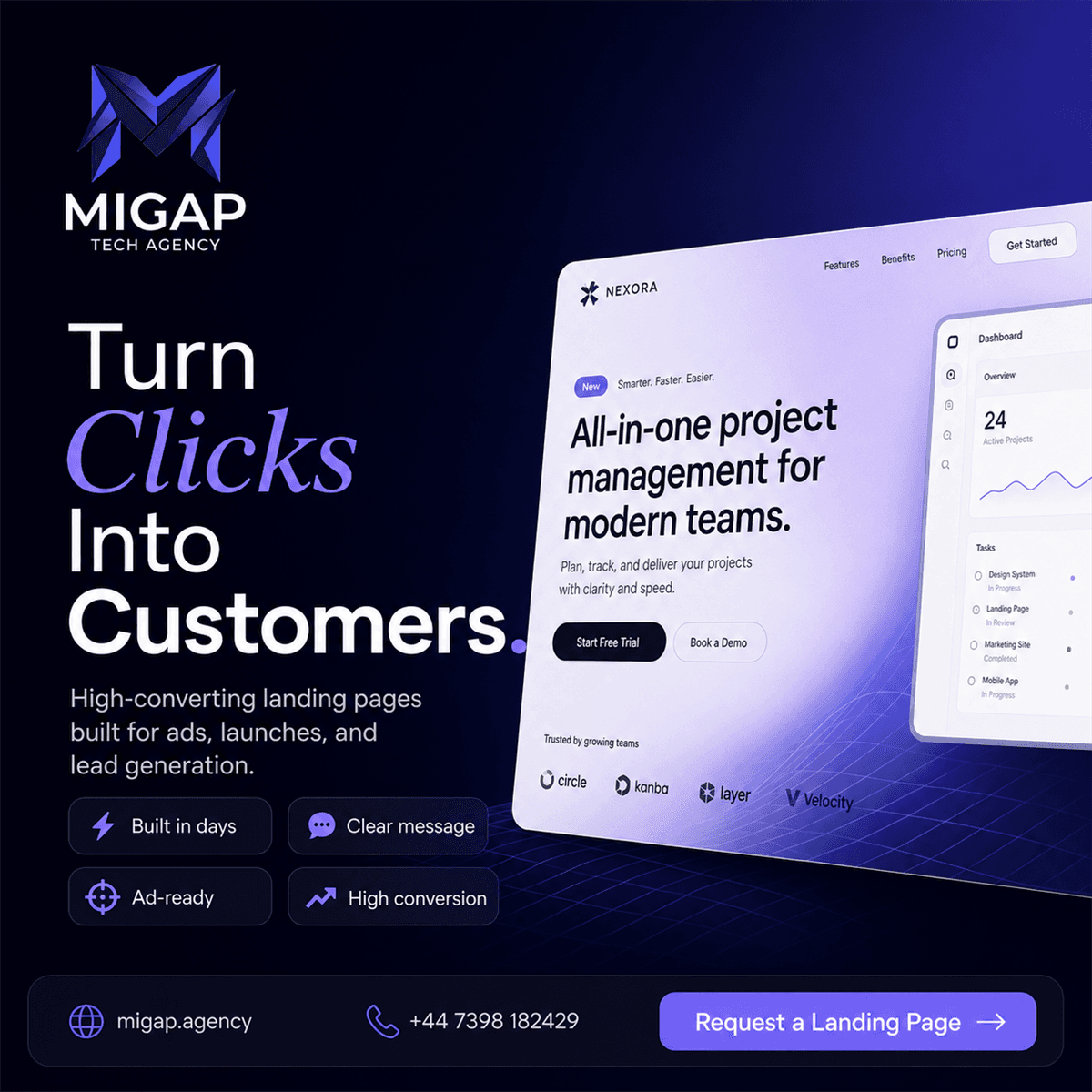
A landing page is one page built around a single goal: convert a visitor into an enquiry, a booking or a sale, and nothing else. There is no navigation menu inviting people to wander off to an "about" page, usually just one headline, a short explanation of the offer, some proof it works, and one clear button. It exists to answer a question the visitor already had in mind before they clicked, not to introduce your whole business. Landing pages earn their keep behind paid ads, a single product launch, an event, or a seasonal offer, where every visitor arrives already interested in one specific thing, and where a distraction-free page converts noticeably better than sending that same traffic to a busy homepage.
What is a full website?
A full website is the opposite: it is built to serve many different visitors, with many different questions, arriving from many different places. Someone searching Google for your service, someone who was handed your business card, someone checking reviews before a first appointment. Because it needs a homepage, service pages, an about page and a way to be found organically, it does more work over a longer period than a single page ever could. Where a landing page is built to convert one type of visitor right now, a full website is built to keep earning enquiries for years, largely because search engines can index and rank several pages instead of just one.
Landing page vs full website: how do you decide?
The decision usually comes down to two things: what is driving the traffic, and how long you need the page to keep working.
- Running paid ads, a single launch or a seasonal offer? A landing page converts that traffic fastest, with nothing to distract from the one action you want.
- Relying on Google search, word of mouth or repeat visits? A full website gives search engines multiple pages to rank and gives returning visitors somewhere to explore.
- Selling one product or service right now? A landing page. Offering several services, or planning to grow the business over the next few years? A full website.
- Need something live in days for a specific campaign? Start with a landing page, then build the full site once the offer has proved itself.
How much does each one cost in the UK in 2026?
At Migap, a standalone landing page built for ads, launches or lead generation starts at £200, usually live within a few days because there is only one page of copy and design to get right. A full starter site with up to four pages, home, about, services and contact, starts at £300, and a business site with up to eight pages plus a blog, gallery or booking form is £950. We built exactly that fuller structure for M.I.S Logistic, a Manchester courier and freight company that needed more than one page to cover its fleet, service areas and a one-tap WhatsApp quote button, because their customers arrive from search as often as from a single campaign. Full package details, including what is and is not included at each tier, are on our services page.
Why the advice online contradicts itself
Search this question on Reddit and you will find the same argument running in circles across threads in r/smallbusiness and r/marketing: one person insists landing pages are the only thing that converts, the next says anyone without a real website looks like a scam. Both are right about their own situation and wrong as general advice, because a solo consultant selling one coaching package and a plumber covering four towns have almost nothing in common. Reddit is genuinely useful for spotting the mistakes people regret, and it is worth reading for that, but treat the confident one-line verdicts with suspicion: nobody in the thread knows where your traffic comes from or how long you need the page to keep working. Those two facts decide the answer, not a general rule.
The mistake we see most often
The most common mistake is not picking the wrong one, it is picking only one and stopping there. A business running ads to a landing page with no proper website behind it eventually loses customers who wanted to check reviews, browse other services, or simply confirm the business is real before buying, something Nielsen Norman Group's research on credibility and trust signals consistently shows matters more as the price of the decision goes up. The other direction is just as common: a business pays for a full eight-page website, then runs an ad campaign that sends traffic to the homepage instead of a dedicated landing page, and conversion rates suffer because the visitor has to hunt for the one thing the ad promised. Page speed compounds both mistakes; Google's own Core Web Vitals research shows a slow page loses visitors before it has even finished loading, whichever type of page it is.
Getting started
Most businesses eventually need both: a full website as the permanent home for the brand, and one or more landing pages built for specific campaigns as they come up. Have a look at examples of finished projects in our portfolio, or tell us what you are trying to achieve, a single campaign, an ongoing presence, or both, and we will tell you honestly which one to start with and what it will cost.
If you already have a website and suspect it is not converting the traffic you send it, start with a free website audit instead. We hand-review the site and tell you in plain English whether the problem is the page, the traffic, or neither, before you spend anything. You can also read more about how we approach web design in Manchester.