
A gym running its bookings through Instagram DMs and a WhatsApp group is not unusual, and it is not necessarily wrong at ten members. It falls over at a hundred, when nobody can say with confidence whether Tuesday's 6am HIIT class is full, and a new visitor scrolling a bare bones Facebook page has no way to see what a membership actually costs before deciding whether to bother asking. Personal trainers hit the same wall from the other direction: a strong Instagram following builds interest, but interest does not convert into a booked session without somewhere trustworthy to send it. This guide sets out what a gym or personal trainer website actually needs to do, which features genuinely help someone book a class or session, and what it costs to build one properly in the UK in 2026.
The short answer
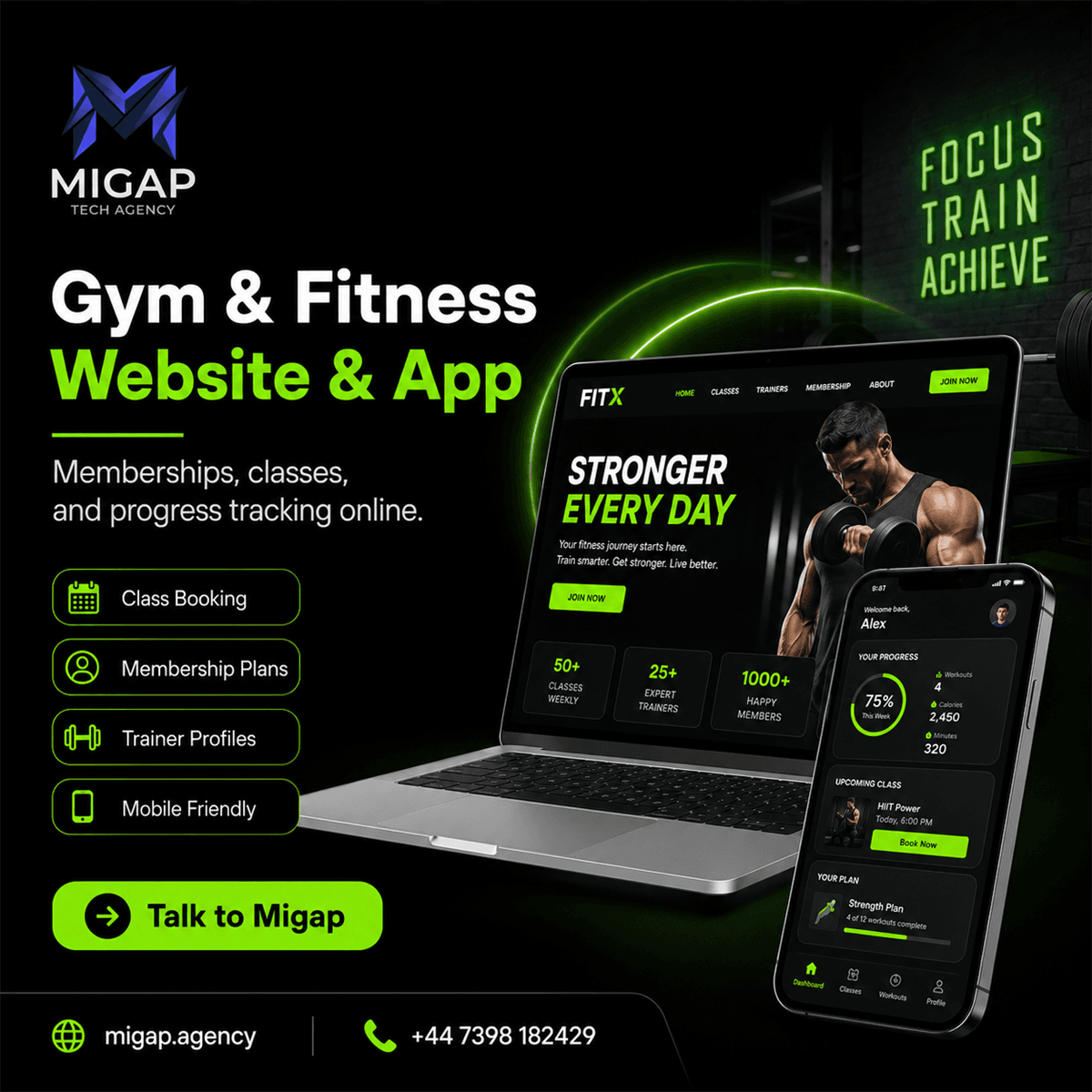
A gym or personal trainer website needs three things working together: a live booking calendar for classes or sessions, membership or package pricing shown openly rather than hidden behind "enquire now", and trainer profiles that build trust before someone ever walks through the door. In the UK in 2026, a business website with class booking, membership tiers and trainer profiles starts at £950, and a dedicated booking and scheduling system can be added to an existing site from £350. A fuller membership app with member logins, progress tracking and a dashboard moves into web app territory, starting at £2,500.
What does a gym or personal trainer website actually need to do?
Gyms and personal trainers are selling the same broad outcome, getting fitter, but the website job is different for each. A gym needs to show that classes are genuinely happening at the times stated, that membership options are clear enough to compare without a phone call, and that the space itself looks like somewhere worth turning up to. A solo personal trainer is selling something more personal: their own credibility, results with real clients, and a straightforward way to book a first session without an awkward back and forth over Instagram. Both fail for the same reason when they fail: a visitor who is already interested cannot find the one piece of information, a price, a class time, a way to book, that would have turned interest into a booking.
Mobile matters more here than in most industries. Someone deciding whether to try a 6am class is usually checking on a phone, often in bed the night before or on the walk to work, and a site that loads slowly or makes a class timetable hard to read on a small screen loses that decision before it is made. Google's Core Web Vitals guidance is a reasonable benchmark for how fast a mobile booking flow should feel, and it is worth testing your own site against it on a real phone, not just a laptop.
Which features actually get someone to book a class or session?
Not every feature earns its place on a fitness website. These are the ones that consistently turn a browsing visitor into a booking:
- A live, mobile-friendly class timetable or booking calendar showing real availability, not a static PDF timetable from last year
- Membership tiers and package prices shown openly on the page, not hidden behind an "enquire for pricing" button
- Trainer profiles with a real photo, qualifications and specialisms, since people book a person as much as a gym
- A prominent "book a free trial" or "first session free" call to action, lower friction than asking for a full sign-up straight away
- Real client results and testimonials, with consent, rather than generic stock photography of unrelated models
- Fast loading on mobile, where most class bookings and personal training enquiries actually happen
How much does a gym or personal trainer website cost in the UK in 2026?
At Migap, a business website with up to eight pages, a class timetable, membership pricing and trainer profiles starts at £950. If you already have a website and just need proper booking added to it, a dedicated booking and scheduling system with calendar integration is £350 on top of an existing build, the same add-on we cover in our guide to booking websites for salons, barbers and clinics, since the underlying calendar problem is nearly identical. A solo personal trainer who mostly needs after-hours enquiries answered without sitting on their phone all evening often gets more value from an AI booking or reception bot instead, a WhatsApp or web bot that takes appointments straight into a calendar, starting at £400. A full gym membership app with member logins, class credits and progress tracking is a bigger build, starting at £2,500. Full pricing for every tier is on our services page.
Does a personal trainer need a different website to a full gym?
Yes, and treating them the same is a common mistake. A gym with multiple trainers and a physical space needs a class timetable, membership tiers, and enough pages to cover facilities and staff, which is exactly the eight-page business site tier. A solo personal trainer rarely needs that much: one clear page explaining who they are, who they help, a handful of real results, and a simple way to book a first session usually converts better than a padded multi-page site trying to look bigger than the business actually is. We built exactly that kind of booking-first flow for Autoride, a car rental client whose entire commercial problem was the same one a gym or PT faces: turning a browsing visitor into a confirmed booking with real availability, not a form promising a callback. The booking engine logic carries across industries far more than people expect.
What do you need to show about membership terms and cancellation?
One of the most common threads on Reddit's r/AskUK and r/DIYUK is some version of "how do I get out of my gym contract", usually from someone who signed up in person and only found the small print afterwards. If your gym takes membership sign-ups through your own website, that is a distance sale, and GOV.UK's guidance on distance selling sets out that customers generally have the right to cancel within 14 days unless you have clearly told them otherwise. Showing pricing, minimum terms and cancellation steps plainly on the site is not just a compliance box to tick, it is a genuine trust signal in an industry Reddit users openly distrust on exactly this point, and a gym that is upfront about it stands out for the right reasons.
Getting started
If you are not sure whether your business needs the full gym tier or the simpler personal trainer setup, tell us how your business actually runs, one location or several, one trainer or a team, and we will recommend the right tier honestly rather than the more expensive one. You can see more examples of how we approach booking-led websites from our base in Manchester on our web design in Manchester page.
If you already have a website and suspect people are giving up before they book a class or session, start with a free website audit instead. We hand-review it on a real phone and tell you plainly what is losing you bookings before you spend anything on a rebuild.